
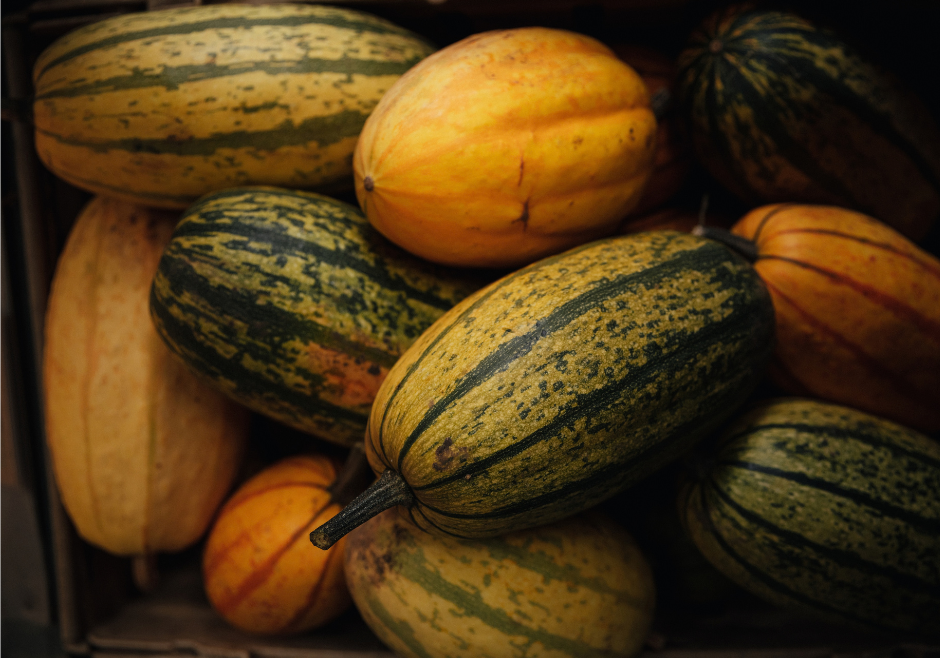
October is when autumn starts to mean business. The last tomatoes, courgettes, peppers and beans might hang on until the first proper frost, but they’re rapidly giving way to squash, pumpkins, leeks, cabbages, kale and root vegetables.
Apples and pears should be taking centre stage, along with quince, chestnuts and wild mushrooms. After such a hot, dry growing season, yields are inevitably going to be patchy, and some crops might be a little smaller or more misshapen than usual. They won’t necessarily win any beauty contests, but there’s unlikely to be much wrong with the flavour.
October also marks the proper beginning of the game season, with venison, pheasant and partridge joining rabbit and pigeon on the butchery counters – availability permitting, of course.
Here’s what to look out for this October.
Apples & pears
British apples and pears are at their best now, with plenty of varieties arriving as the season progresses. Eat them as they are, bake them into cakes and puddings, cook them down for sauces and chutneys or pair them with pork, sausages and cheese. It hasn’t been an easy year for apple growers, but what fruit there is should still be put to good use. Slightly battered apples are perfectly good for cooking, juicing or preserving.
Squash & pumpkins
As summer fades, squash take over, with some particularly good organic varieties from Riverford arriving in our shops. Celebration is sweet and nutty, Red Kabocha is rich and almost chestnut-like, Delicata has thin, edible skin, and blue-grey Crown Prince is particularly good roasted. Roast them until caramelised, add them to soups, stews and curries, or mash with plenty of butter. Stored somewhere cool and dry, they’ll keep well into winter.
Root vegetables
Beetroot, carrots, celeriac, parsnips, swede and turnips should all become more prominent this month, although the dry summer means yields and sizes may vary. They’re dependable rather than glamorous, but that’s rather the point. Roast them, mash them, grate them into salads or use them as the base of soups, stews and gratins. Celeriac is particularly good raw in remoulade or mashed with potatoes and plenty of butter.
Brassicas & leeks
Cabbages, cauliflower, broccoli, kale and leeks come into their own as the weather cools. They work well in the sort of food October calls for: soups, gratins, pies, pasta and slow-cooked dishes. Try roasting cauliflower rather than boiling it, frying shredded cabbage with bacon or adding kale to soups and stews. Leeks need very little beyond butter, seasoning and enough time to soften properly.
Mushrooms & chestnuts
October is a good month for cultivated and wild mushrooms. Fry them hard in butter, pile them onto toast or add them to pasta, risotto, pies and stews. Chestnuts are good roasted, but they’re equally useful in stuffings, soups and autumn puddings. If you’re foraging for mushrooms, make absolutely sure you know what you’re picking. Some poisonous varieties look uncomfortably similar to edible ones.
Game
Game season is now properly underway. Organic venison from Chilton Deer Farm, near Tiverton, has arrived on our butchery counters, including diced venison for slow cooking, steaks for a quicker supper and haunch for roasting. Our butchers have also made venison sausages and burgers using the same organic meat.*
Pheasant and partridge should also begin appearing alongside rabbit and pigeon as the season progresses. Availability varies, so ask our butchers what has come in and how best to cook it.
*Our venison sausages and burgers aren’t certified organic, as some of the seasonings we add are not organic.
Also in Season
Keep an eye out for:
- Apples
- Beetroot
- Broccoli
- Brussels sprouts
- Cabbage
- Carrots
- Cauliflower
- Celeriac
- Celery
- Chestnuts
- Chicory
- Chillies
- Courgettes
- Cucumbers
- Kale
- Leeks
- Lettuce
- Marrows
- Onions
- Parsnips
- Pears
- Peppers
- Potatoes
- Pumpkins
- Quince
- Radishes
- Rocket
- Spinach
- Squash
- Swede
- Swiss chard
- Tomatoes
- Turnips
- Watercress
- Wild mushrooms
Exactly what’s available will depend on the weather and what our growers are harvesting. After the summer we’ve had, some crops will be smaller or in shorter supply than usual.
That’s rather the point of eating seasonally – you eat what’s actually growing, rather than what the calendar says ought to be there.
If you’re foraging
Keep an eye out for blackberries, sloes, rosehips, crab apples, sweet chestnuts and field mushrooms. Only pick what you can identify confidently, leave plenty behind for wildlife and avoid collecting from private land without permission.