
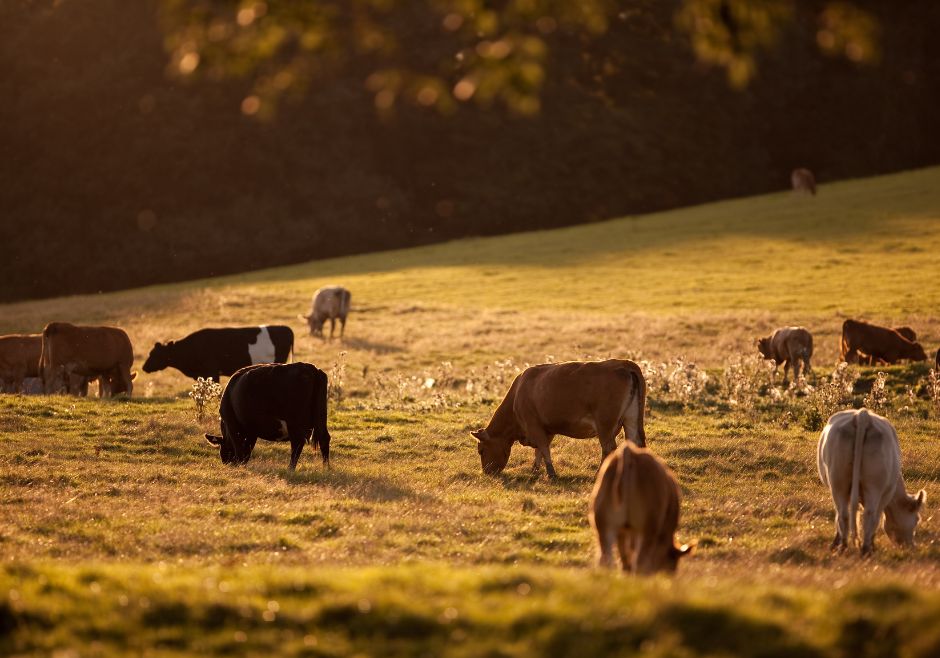
We don’t know what August will bring but I doubt whether anyone can deny that July has been a bit of a game changer. We’ve had our problems with refrigeration failures and generally overheating, but nothing compared with on the farm. Four hundred dairy cows and followers need a lot of food, and even more water. On a hot day, a cow will drink 150 litres of water – as fast as it comes out of a tap. In some of the outlying fields, the pipes just aren’t big enough to get enough water to the troughs. The grass isn’t growing so, like last summer, they’re often being kept in, out of the sun, and fed hay and silage – normally saved for the winter. Half the herd calves in the autumn and those cows are being dried off earlier than normal. There’s every chance that milk could be in short supply.
As usual, local sheep farmer George Welsh has been sending us some lovely lambs, but there’s not much grass left for the main flock, so keeping them coming will be a problem.
You might have heard about yields of Cornwall’s second early potato crop being a third down, but that will be nothing compared with when the time comes to harvest the later-sown main crop. They’ll be the spuds that have really suffered, and I’m sure it will be the same with most maincrop vegetables. Irrigation ponds have run dry and boreholes are working overtime. Some farmers are lucky enough to have licences to pump from streams and rivers but the environmental consequences are, potentially, pretty severe. Replenishing the water table can take decades, so boreholes are definitely not the answer either. More above-ground water storage has to be the way forward, but it takes time. I know Riverford Organics are going through the process but, apparently, with all the planning and environmental consultations, it will be at least two years before they can start digging.
Farmer Govier, near Crediton, has lost one crop after another of spinach, chard and the like, and says all the predatory bugs are ‘freestyling’, eating and laying their eggs on whatever they can lay their grubby little claws on. His leeks, usually pretty safe from predators, have been decimated. Arable farmers are harvesting early with greatly reduced yields and that will have an impact on both wheat flour and animal feed prices.
What’s the answer? Regenerative farming to improve soil health will help, but it takes decades. Forty years of organic farming on Riverford Farm is just the start when it comes to righting the wrongs of what was probably only a similar period of more intensive agriculture. Next-generation Watson farmer Will is experimenting with ‘mob grazing’, where the cows only get the chance to eat a third of the grass, with the rest being trampled back into the soil. Recalibrating the farming calendar to a more European model, with earlier harvests and fallow summers, will help – as long as it isn’t too wet to cultivate in the autumn and early spring.
Hail Mary!!