
Tim Lang’s article in The Guardian (read it here) is well worth a read. It highlights the failures of a ‘just in time’ supply chain and the benefits of keeping plenty of stock at every stage of the food chain, from farm to kitchen store cupboard. My father, wise man that he was (although a touch too puritanically gloomy for most tastes), was always going on about food security. He seemed to have a direct insight into the ledgers of ancient Egypt, frequently drawing unfavourable comparisons with the state of the Pharaoh’s grain stores.
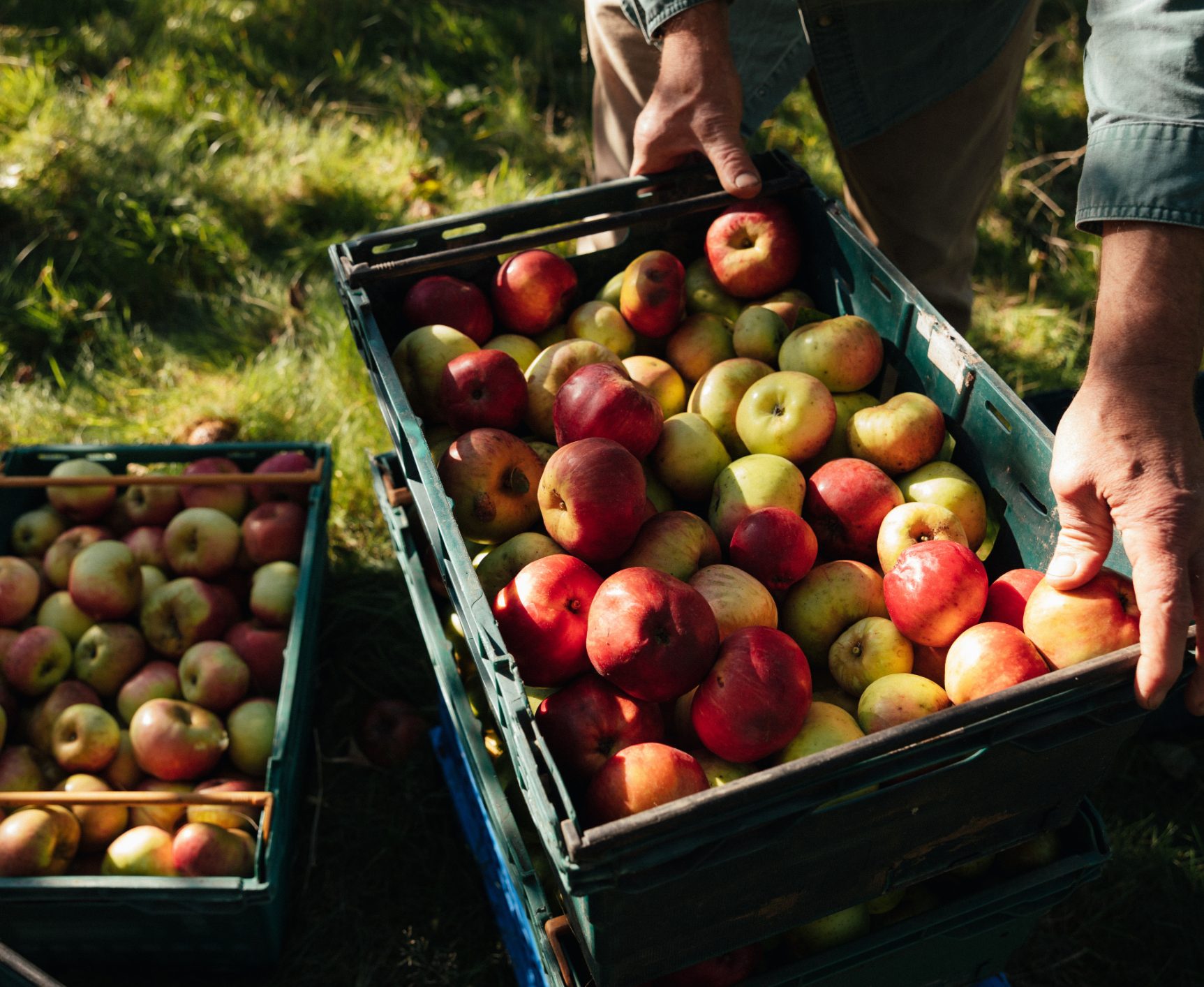
Down on the farm, or rather, in the orchard. As Tim Lang points out, we import 82% of the pathetically small amount of fruit we consume, so I’ve made it my mission to make sure our apples don’t go to waste. Juice is great, but it’s not going to make the farmer rich and, as usual, if you can produce saleable table fruit, you’re probably going to get screwed further up the supply chain. I spoke to one of the few remaining local dessert apple growers and couldn’t believe how little he was being paid for his hand-picked fruit. It all went to a grading, storage, packing and distribution facility in Herefordshire, and he was getting a measly 40p a kg, compared with around £3 for English Cox’s on the shelf in the multiples.
Anyway, to cut a long story short, we’ve been turning cider into wine by ‘top grafting’ slightly more edible, all-purpose varieties (Bramley’s, Discovery, Ashmead’s Kernel etc.) onto some pretty hardcore cider apple trees. It’s all fairly miraculous (I wish someone would top graft me), and in a couple of years we should have an abundance of fairly unique apples. I say unique because I can’t believe the original tree won’t have some input into the resulting apple.
Sadly, probably because of the UK food business model, it’s hard to see where the homegrown is going to come from. I’m still reading that bigger fruit and veg growers are getting out, and many of the large grower / pack-houses import more produce than they grow. But around here, and elsewhere, there’s a whole host of people trying to get into small-scale; growing Baddaford Collective, Dartington Old School Farm, Pip’s Pick Your Own, Apricot Centre, Chef’s Garden, etc. There’s even a squash co-op in Dartington, not to be confused with Dartington Squash Club.
With a bit of support, these growers could fill the gap, but with just a few remnants of the independent infrastructure (markets, wholesalers etc) left, getting their produce to market is difficult. Box schemes are great, but they have their limitations. Farmer’s markets sound great but the fact that most of them seem to end up as street food stands speaks for itself. Hospitality outlets are often keen, but the amounts are limited, which leaves like-minded independent retailers like us to fill the gap. We’ll keep working on that one but the fact that most farm shops don’t even have a reasonably comprehensive range of fresh produce is pretty depressing.