
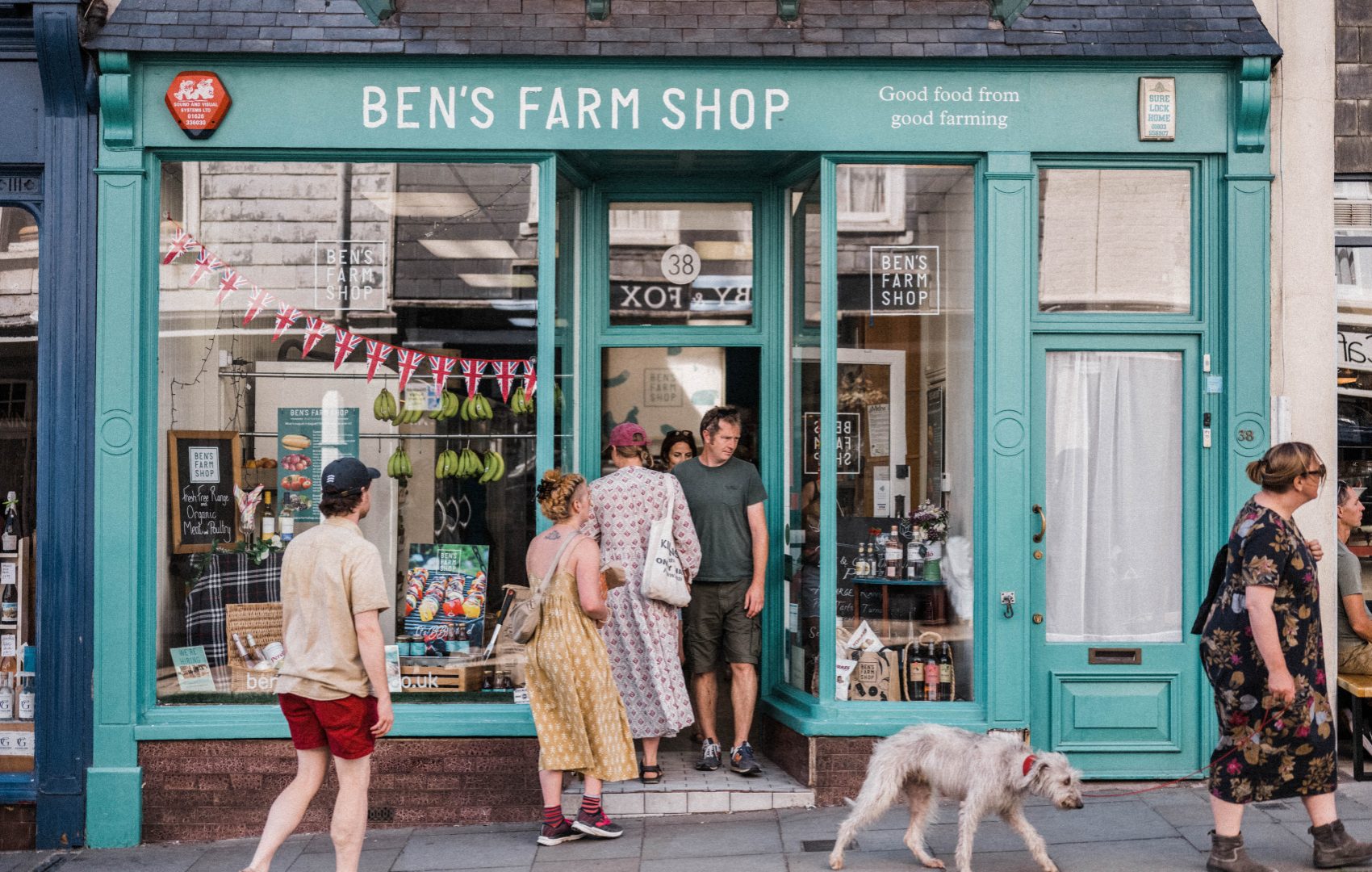
Much has been written about the state of the British high street, with endless suggestions and remedies but, so far, little effect. Acknowledgement that we have a bit of a problem goes back decades – long before the Mary Portas/David Cameron love-in of 2011. Apart from identifying the problem, The Portas Review achieved little and ended in the usual acrimonious blame game.
Since then, Amazon has become ever more dominant and the new, post-war high streets have gone from bad to worse. The case of Newton Aycliffe, highlighted in The Guardian, is at the more extreme end of the spectrum, but it’s not alone. Every high street in the country has its problems.
Times change and nothing stays the same. Rather ironically, several mail-order companies are performing something of a volte-face and deciding that bricks-and-mortar retailing might work alongside the internet. But I imagine they’ll be looking for sites offering maximum exposure, so the bottom end of Cornwall Street in Plymouth probably wouldn’t cut the mustard. Mind you, I don’t suppose the top end would either. That approach might work in Covent Garden, but it probably won’t single-handedly revive every high street in the country.
The Borough Market model seems to be the one every economic development officer in the country is trying to emulate. Nowadays it has become something of a victim of its own success – and, arguably, a tourist trap – but it has certainly worked, attracting dozens of like-minded businesses. With a potential customer base of millions of well-to-do Londoners, Tate Modern, the National Theatre and London Bridge station just round the corner, and the City within walking distance, the stars are aligned to an extent few places could match.
The food court/market concept also seems particularly successful around Manchester, with Altrincham and Mackie Mayor getting rave reviews. But these are mainly eateries which, although important in the mix, feel more like the result rather than the cause of successful urban regeneration. If you’re going out to eat, you’re probably not going to fill your trolley with shopping – but if you’re going shopping, you might well stop for something to eat.
It’s easy to view the past through rose-tinted spectacles, but I don’t think many would argue that every town needs a functioning and vibrant forum or town centre where people can meet and do business. What that looks like will vary from place to place and will probably be a blend of retail, hospitality and services but, judging by the winners and losers around here, it won’t be multiple- or chain-dominated. They have their place, but they don’t exactly offer excitement or diversity.
The problem is that landlords love them – and they’re the people who really control the curation of the high street. Over the years, the power of ownership (aka capital) has increased, as have the demands of landlords. The deal has become more and more one-sided. Upward only rent reviews and full repairing leases are the norm which, I can tell you, in a town as old as Totnes, can be quite onerous. Then there’s the security and personal guarantees required in case things go wrong. Combined, they put most well-located retail premises well out of reach of all but the most well-established businesses (such as Boots and WHSmith) – which tend to be the problem, not the cure.
I can’t believe it would be too difficult or expensive to come up with some sort of government-funded guarantee scheme that would assuage the fears of the property-owning class.
And then there’s the thorny issue of rates. It’s been mooted many times before, but I don’t understand why they can’t take the bull by the horns and start charging fulfilment centres appropriate and reasonable rates – based on turnover rather than position. They’re retailers, not warehouses, and should pay the same as if they were on the high street.