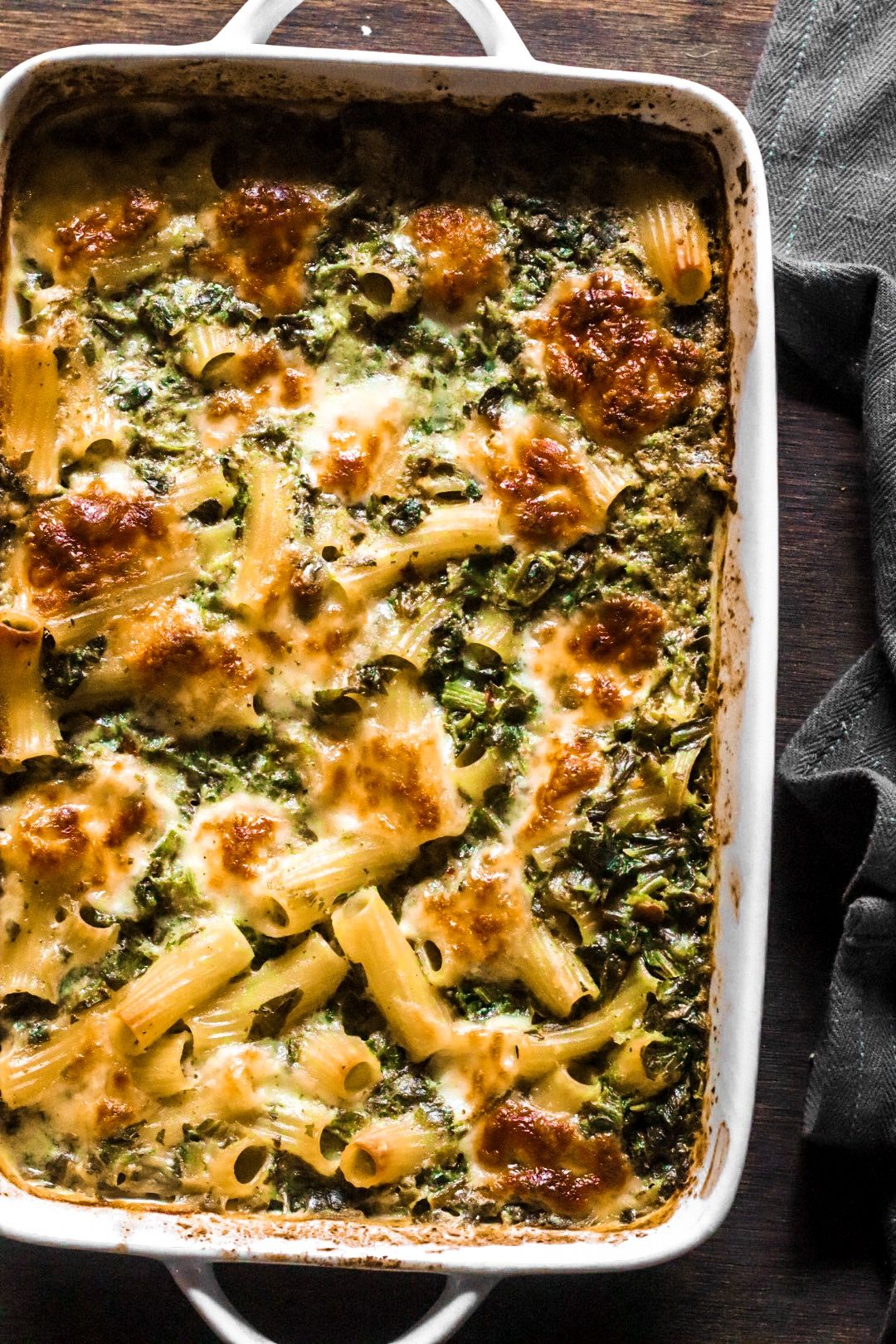
Now to something altogether more comforting: a pasta al forno that leans into the season. This Kitchen in Rome-inspired recipe works with almost any primavera vegetable, alongside -or instead of the courgette. If using broad beans, make sure to double-pod them, as the skins can turn unpleasantly leathery. Spinach, artichokes and asparagus all work well. As with so many pasta dishes, the key is to keep some of the cooking water to loosen the béchamel. Stuffing pasta can be a long and messy business, so this takes a more straightforward, macaroni cheese–style approach, using Northern Pasta’s spelt radiatori to very good effect.
400glarge, hollow pasta, such as lumaconi, conchiglioni or paccheri
300gcourgettes or mix of artichokes, asparagus & spinach
6spring onions
6tbspolive oil
200gpeas, fresh or frozen
300gricotta
1zest and juice from one lemon
a bunch of basil - leaves separated and chopped
60gparmesan, grated
300mlwhole milk
30gbutter, plus extra for greasing
30gflour
salt and black pepper
1
Bring a large pan of salted water to the boil and cook the pasta until exceptionally firm - very al dente - probably about 4 minutes less than the recommended cooking time, as it will continue to cook in the oven. Drain, reserving some of the pasta cooking water.
2
Using a peeler or mandoline, cut the courgette into strips and slice the onion. Gently fry the onion in olive oil with a pinch of salt until soft, then add the courgette and peas and cook until the courgette is floppy and the peas tender. If you’re using other vegetables, cut them into bite-sized pieces and cook them first until slightly al dente - again, they will continue cooking in the oven.
3
Stir together the ricotta, lemon zest and juice, 30g of Parmesan, chopped basil, a little salt and pepper, and 2–3 tablespoons of the pasta cooking water to form a loose, soft cream. Add some of the cooked vegetables. Spoon the ricotta cream into each shell or tube, then nestle them in a buttered baking dish, filling the gaps with the remaining vegetables.
4
Warm the milk in a small pan. In another pan, melt the butter, then add the flour and stir until you have a thick paste. Cook for 1 minute. Remove from the heat and gradually add the warm milk, whisking or stirring until fully incorporated. Return to a low heat and stir until the béchamel is the consistency of thick cream. Season.
5
Pour the béchamel over the pasta shells and into the gaps between the vegetables. Give the dish a gentle shake so the sauce sinks in, then sprinkle with the remaining Parmesan. Bake at 200°C/400°F/gas mark 6 on the top shelf of the oven until a light golden crust forms, about 15 minutes. Leave to rest for 10 minutes before serving.
Pour the béchamel over the pasta shells and into the gaps between the vegetables. Give the dish a gentle shake so the sauce sinks in, then sprinkle with the remaining Parmesan. Bake at 200°C/400°F/gas mark 6 on the top shelf of the oven until a light golden crust forms, about 15 minutes. Leave to rest for 10 minutes before serving.
Ingredients
400glarge, hollow pasta, such as lumaconi, conchiglioni or paccheri
300gcourgettes or mix of artichokes, asparagus & spinach
6spring onions
6tbspolive oil
200gpeas, fresh or frozen
300gricotta
1zest and juice from one lemon
a bunch of basil - leaves separated and chopped
60gparmesan, grated
300mlwhole milk
30gbutter, plus extra for greasing
30gflour
salt and black pepper
Directions
1
Bring a large pan of salted water to the boil and cook the pasta until exceptionally firm - very al dente - probably about 4 minutes less than the recommended cooking time, as it will continue to cook in the oven. Drain, reserving some of the pasta cooking water.
2
Using a peeler or mandoline, cut the courgette into strips and slice the onion. Gently fry the onion in olive oil with a pinch of salt until soft, then add the courgette and peas and cook until the courgette is floppy and the peas tender. If you’re using other vegetables, cut them into bite-sized pieces and cook them first until slightly al dente - again, they will continue cooking in the oven.
3
Stir together the ricotta, lemon zest and juice, 30g of Parmesan, chopped basil, a little salt and pepper, and 2–3 tablespoons of the pasta cooking water to form a loose, soft cream. Add some of the cooked vegetables. Spoon the ricotta cream into each shell or tube, then nestle them in a buttered baking dish, filling the gaps with the remaining vegetables.
4
Warm the milk in a small pan. In another pan, melt the butter, then add the flour and stir until you have a thick paste. Cook for 1 minute. Remove from the heat and gradually add the warm milk, whisking or stirring until fully incorporated. Return to a low heat and stir until the béchamel is the consistency of thick cream. Season.
5
Pour the béchamel over the pasta shells and into the gaps between the vegetables. Give the dish a gentle shake so the sauce sinks in, then sprinkle with the remaining Parmesan. Bake at 200°C/400°F/gas mark 6 on the top shelf of the oven until a light golden crust forms, about 15 minutes. Leave to rest for 10 minutes before serving.
Pour the béchamel over the pasta shells and into the gaps between the vegetables. Give the dish a gentle shake so the sauce sinks in, then sprinkle with the remaining Parmesan. Bake at 200°C/400°F/gas mark 6 on the top shelf of the oven until a light golden crust forms, about 15 minutes. Leave to rest for 10 minutes before serving.
Notes
Pasta al forno baked pasta with ricotta and spring vegetables
We use cookies to ensure that we give you the best experience on our website. If you continue to use this site we will assume that you are happy with it.