
 AuthorBen WatsonCategoryAutumn, Dinner, Lunch, Winter
Some dishes are worth taking your time over. Fabada Asturiana is a rich, slow-cooked bean stew from Asturias, where creamy beans take on the flavour of smoked chorizo, morcilla, panceta and saffron. It’s a hearty dish for a long lunch, and even better made the day before. This recipe comes from Monika Linton’s Brindisa: The True Food of Spain, shared with permission.
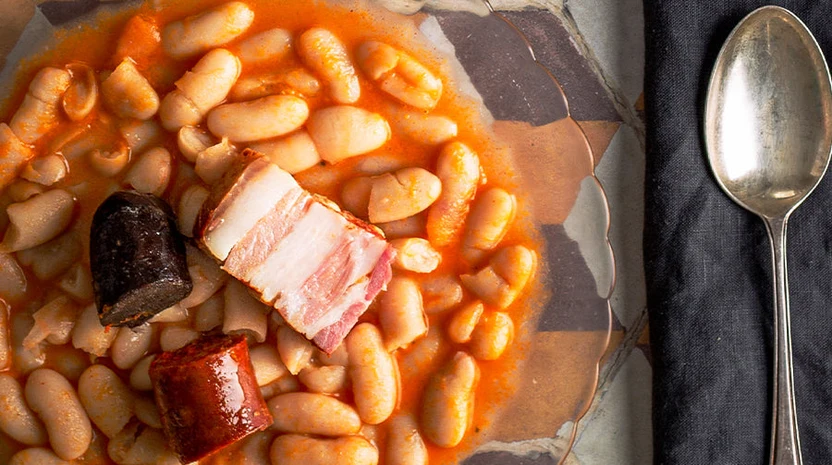
Drain the beans and put them in a casserole with the panceta, chorizo, morcilla, garlic, bay leaf and guindilla. Add fresh cold water to cover.
Bring to the boil and skim off any foam. Reduce the heat to very low. The beans should cook gently, with only the occasional bubble breaking the surface. Use a heat diffuser if you have one, and don’t stir: this helps keep the beans and morcilla intact.
After 1 hour, pour in 50ml cold water. This traditional step, known as ‘shocking’ the beans, stops the boil. You can repeat it once more after another hour.
Cooking time depends on the beans, so start tasting them after the first hour. They should be tender but hold their shape; this usually takes 3–4 hours.
About 15 minutes before the beans are ready, lightly toast the saffron in a dry pan and add it to the casserole.
Taste and add salt if needed. The panceta and chorizo will already have seasoned the stew.
Faba beans are traditional, but large butter beans or planchada beans work well too. If you can’t find firm, semi-cured Asturian morcilla, use a softer black pudding: slice and fry it gently, then add it just before serving so it doesn’t break up during the long cooking.
The fabada can be made a day ahead and reheated very gently; the flavour improves overnight.
I’ve treated the Crunchy Chickpea and Cauliflower Salad text you pasted as a separate recipe, so I’ve left it out of this edit.